
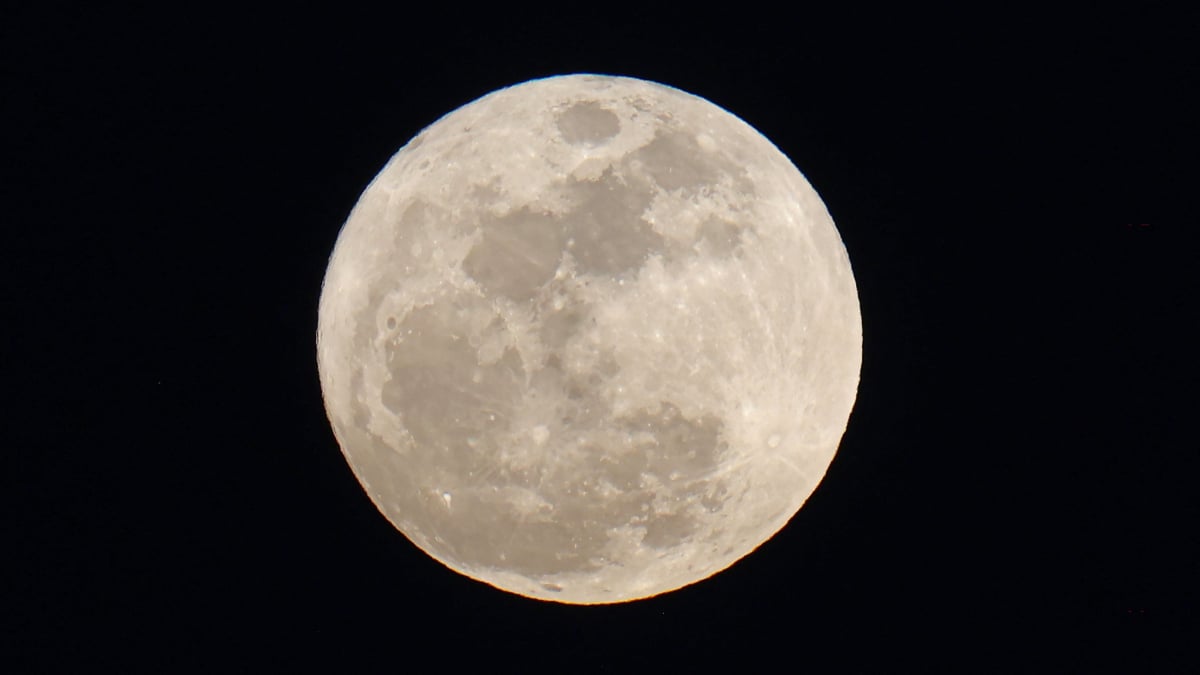
May Full Moon 2026: See The Blue Moon
May is an exciting month for Moon watchers, as it features two Full Moons instead of the usual one. The first occurred on May 1, the Flower Moon, and the second is set to appear on May 31.
When a month contains two Full Moons, the second one is known as a “Blue Moon.” Don’t worry, you’re not going to look up and see a literal blue colored moon in the sky, the name just refers to its rarity.
Intrigued? Keep reading to find out more about the second of this month’s Full Moons.
When is the May full moon?The Full Moon will occur on Sunday, May 31. Time and Date estimates it will peak at 4:45 a.m. ET.
What is the May full moon called?This Moon is simply known as a Blue Moon, perhaps a nod to the famous saying…
Mashable Light Speed
These occur when there are two Full Moons in the same month. Because the lunar cycle is just under 30 days, the timing occasionally lines up like this, with one Full Moon at the start of the month and another at the end. It’s fairly rare, only coming around every couple of years, NASA says. This is known as a monthly Blue Moon.
There’s also something called a seasonal Blue Moon, which is when a season has four Full Moons instead of the usual three.
When is the next full moon?The next Full Moon will take place on June 29.
What are the lunar phases?The Moon goes through eight phases as it orbits Earth over about 29 and a half days. At each point, the Sun lights up a different part of it from our perspective, even though we always see the same side. As it moves along its path, the lit portion grows and shrinks, shifting from full brightness to partial glow and back again.The phases are:
New Moon — The moon is between Earth and the sun, so the side we see is dark (so, we don’t see anything).
Waxing Crescent — A small sliver of light appears on the right side
First Quarter — Half of the moon is lit on the right side. It looks like a half-moon.
Waxing Gibbous — More than half is lit up, but it’s not quite full yet.
Full Moon — The whole face of the moon is illuminated and fully visible.
Waning Gibbous — The moon starts losing light on the right side
Third Quarter (or Last Quarter) — Another half-moon, but now the left side is lit.
Waning Crescent — A thin sliver of light remains on the left side before going dark again.
Want more science and tech news delivered straight to your inbox? Sign up for Mashable’s Light Speed newsletter today.