
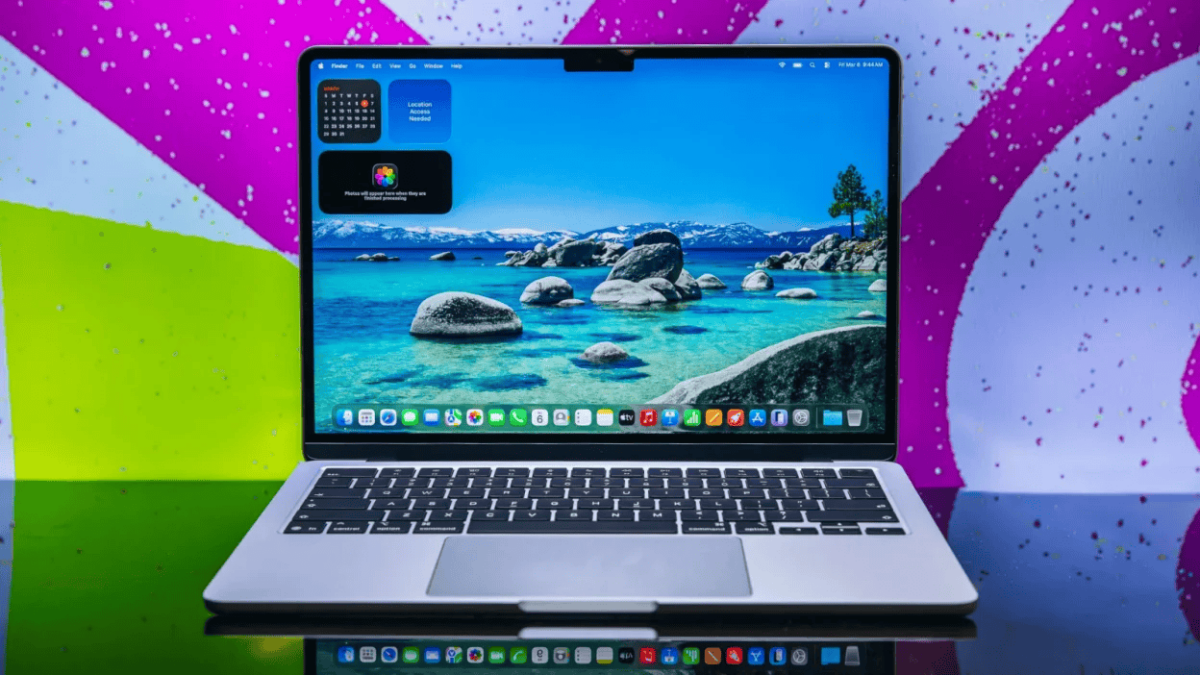
The Best Laptops Of 2026: We Tested 80+ Models To Find Our Favorites
The global memory crisis is making it harder to find good laptops at a price you can afford. Start with these eight picks.
By
Haley Henschel
Haley Henschel
Senior Shopping Reporter
Haley Henschel is a Chicago-based Senior Shopping Reporter at Mashable who reviews and finds deals on popular tech, from laptops to gaming consoles and VPNs. She has years of experience covering shopping holidays and can tell you what’s actually worth buying on Black Friday and Amazon Prime Day. Her work has also explored the driving forces behind digital trends within the shopping sphere, from dupes to 12-foot skeletons.
Read Full Bio
on July 26, 2026
All products featured here are independently selected by our editors and writers. If you buy something through links on our site, Mashable may earn an affiliate commission.
Credit: Joe Maldonado / Mashable
The best laptops are fast enough for their primary use cases, well-made, and priced fairly for their specs. Ideally, they also have enough battery power to last a full workday (but often much longer). Whether your preferred daily driver is a sleek Apple MacBook, a versatile Windows laptop, or a simple Chromebook, a reliable PC is a solid investment that feels worth it for years to come. After testing 80+ laptops over two years, we believe these are the top laptops for 2026.
These are the tech, tools, and products — from laptops to e-readers, from earbuds to robovacs, and more — that Mashable ranks best in class.
Table of Contents Mashable has been testing laptops for over 10 years. Over the past two years alone, the team and I have researched dozens of models and tried more than 80 of the most promising configurations available. We use a meticulous testing procedure involving real-world stress tests and artificial benchmarks to evaluate our contenders on the basis of performance, battery life, design/build quality, and value.
This regularly updated guide serves as our laptop trophy case, highlighting the best-in-class models we’ve tried across different subcategories. For even more recommendations, check out my dedicated guides to the best MacBooks, the best Windows laptops, the best cheap laptops, and the best Chromebooks.
A note about laptop pricesA recent boom in AI data center construction has caused a global shortage of RAM and SSD storage chips (often referred to as “RAMageddon”). As a result, many consumer tech devices that use these components, including the best laptops, have seen steep price hikes this year. The shortage is expected to worsen and could last into 2028, driving up prices even further and making good values in the budget and mid-range tiers even scarcer. Apple was the most recent brand to raise laptop prices, with MacBooks getting $100 to $300 increases.
This is something the Mashable team is taking into consideration as we assess laptops and select ones to recommend to our readers. Moreover, we’ve gone back and re-evaluated several models that have gotten more expensive since we first tested them. At the time of writing, only one previous top pick has gotten so unreasonably pricey that we think it’s no longer worth buying. That would be the Lenovo Chromebook Plus 14, which jumped from an already-high $750 to $1,000 as tested. We’ve since replaced it with a much more cost-effective option that’s less snazzy, but still apt for most Chromebook users. You can read more about it and our other current picks below.
Our Pick
Amazing value M5 chip is incredibly powerful Sleek all-aluminum design with a pretty display Excellent webcam, speakers, and keyboard Premium haptic trackpad Doesn’t have a ton of ports Got a $200 price hike in June (but still a solid deal in this market) Apple’s latest MacBook Air is a fantastic pick for the everyday macOS user, including most professionals and college students. Anyone needing a polished, relatively portable, and fairly priced mid-range laptop should put it on their shortlist.
Read Mashable’s full review of the 15-inch Apple MacBook Air (M5).
The MacBook Air has always been an excellent laptop, but in 2026, it’s become my standard bearer, my touchstone — the all-rounder I compare against virtually every other laptop that crosses my desk. Its M5 chip offers unrivaled performance for the price, whether you’re using it for basic single-core tasks (like web browsing) or more demanding multi-core workloads (like occasional light video editing). Its build quality is also superb. Its 2.8K Liquid Retina display is bright, sharp, and vibrant; its speakers sound incredible; its Magic Keyboard is satisfyingly snappy; and its smooth haptic touchpad gives it a premium feel. It’s actually very rare to see the latter at this price point.
While it’s not what I’d call a battery life overachiever — see: some of the Windows laptops on this list — the MacBook Air still lasts well over two workdays per charge. We got almost 18 hours out of it in a video rundown test.
I think most people will appreciate the larger screen on the 15-inch MacBook Air, but if you’d prefer a cheaper, more portable option, there’s a 13-inch size, too. They’re almost identical; the 15-incher just has two extra speakers and a slightly better GPU in its base model.
Incredible performance; can keep up with MacBooks in any scenario Big NPU for on-device AI workloads Amazing battery life Super lightweight Pretty OLED display Creamy keyboard A great value Some compatibility issues Average webcam and speakers If you prefer Windows, the 2026 Asus Zenbook A14 is my top choice for almost anyone who needs a new daily driver. It actually makes a great MacBook Air alternative if you want a general-purpose ultraportable with better battery life, an OLED display, and more ports.
Asus updated my beloved Zenbook A14 with Qualcomm’s fresh Snapdragon X2 Elite processor for 2026. It’s more expensive than the original version from last year, but it’s definitely worth the upcharge. It used to lag behind same-gen MacBooks, but it’s now one of the only devices that can keep up with both single- and multi-core tasks — so things like basic word processing and light video editing, respectively. In fact, in multi-core scenarios, it’s almost 20 percent faster than the M5 MacBook Air. At the time of writing, it was the eighth-fastest laptop in our entire testing database, beating 92 percent of the competition; other stragglers include the MacBook Pro and many beefy PCs geared toward gaming and creative work. (This is just in the context of our artificial performance benchmark, by the way. The competition won’t throttle you as much when you’re running demanding software IRL, but the Zenbook A14’s results are amazing nonetheless.)
That impressive performance is boosted when you factor in this 14-inch laptop’s battery life test results. It lasted over 27 hours on a single charge, up from 22 hours in the previous generation. It’s the third-longest-lasting laptop we’ve ever tried.
The Zenbook A14 is made of a magnesium-aluminum alloy called “Ceraluminum” that’s durable, scratch-resistant, and deceptively lightweight. It weighs just 2.4 pounds, or 0.3 pounds less than the 13-inch MacBook Air. That doesn’t sound like a huge difference, but I was shocked the very first time I picked one up. It still feels super sturdy despite its featheriness, fortunately, so I’d have no qualms about toting it to an office, airport, or coffee shop. (You’ll want to show it off in public, by the way. That Ceraluminum chassis has a ceramic look and feel to it, and it’s adorned with reflective gold Asus logos that remind me of jewelry. It’s very “organic modern” and unique.)
Great battery life Big, bright-enough display Decent mid-range performance for a Chromebook Comes with a protective sleeve Often on sale for as little as $299 Not super portable (but on the lighter side for a 16-incher) Not very future-proof No keyboard backlighting Tinny speakers This 16-inch Chromebook is a durable, practical pick for users with the most basic workloads and the strictest budgets. Its large screen is handy for watching movies.
The Acer Chromebook Plus 516 is nothing special, but it has no major flaws and doesn’t feel like a clunker. (We’ve tried much nicer Chromebooks, but they cost upwards of $750 to $1,000. Just get a MacBook Air at that point.) It also happens to be the fastest sub-$500 laptop we’ve tried; the MacBook Neo no longer counts after Apple’s price hike. Since it’s a Chromebook Plus, it supports some exclusive AI features that aren’t available on regular Chromebooks, like Live Translate and Help me read/write.
This puppy clocked in at just over 14 hours per charge, easily beating our 10-hour median for the Chromebook category. It’s the third-longest-lasting Chromebook we’ve ever tried. You won’t have to worry about it dying in the middle of a Severance episode or a homework session.
The Chromebook Plus 516 isn’t what I would call “portable,” but it’s on the lighter side for a 16-inch device. Its large 1200p matte display is rated at only 300 nits, but we found that it looks much brighter in person. Its plastic design is pretty boring, but it feels sturdy and doesn’t have any issues with hinge strength or annoying fingerprint smudges. Its keyboard has a satisfying feel (and a numpad!), and it comes with an HDMI port if you want to hook it up to a monitor or TV. As an extra bonus, it’s often on sale for as low as $300. Even at full price, though, you’re not going to find a better value in the “under $500” realm.
Amazing single-core performance Same all-aluminum chassis as nicer MacBooks Fun color options Pretty Liquid Retina display Great speakers Not very future-proof No keyboard backlighting Few ports Got a $100 price hike in June (but still a decent deal in this market) If you’re trying to spend well under $1,000, and you want a laptop that feels more premium than it really is, Apple’s MacBook Neo is undoubtedly the best budget laptop you can buy.
Read Mashable’s full review of the Apple MacBook Neo.
Even after a $100 price bump this summer, the MacBook Neo is still an unrivaled value in the budget category. Most cheap Windows laptops and Chromebooks have plastic components, but this little guy has the same luxe, all-aluminum build quality as any other MacBook. You miss out on extra fixings like keyboard backlighting, a haptic trackpad, and Touch ID (on the base model, at least), but you still get a pretty Liquid Retina display and great speakers. It’s a little thicker than a 13-inch MacBook Air, but it weighs the same.
The Neo’s A18 Pro processor is technically a pared-down iPhone chip, but don’t be fooled: It’s extremely impressive for a budget laptop CPU. In simple single-core workloads (web browsing, word processing), the Neo is just as fast as a last-gen M4 MacBook Air. In such scenarios, it feels snappier than most Windows laptops we’ve tried lately, including five that cost over $2,000.
The Neo lasted 14 hours and 50 minutes in our battery life benchmark. It lags behind its M-series peers there — our battery life median for MacBooks was 19 hours before it arrived — but it’s an overachiever at its price point. Our median for other sub-$1,000 Windows laptops and Chromebooks is just 10.5 hours.
Absurdly good battery life — best of any laptop we’ve ever tested (by a lot) Pretty thin for a 16-inch laptop Large, surprisingly colorful display Above-average speakers Snappy, comfortable keyboard Very boring design with a plastic keyboard deck Display is a little dim Competitors offer better performance Expensive for what it is (but easy to find on sale) Some compatibility issues The HP OmniBook 3 16 is a svelte and understated big-screened notebook that’s ideal for chronic charger-forgetters.
Read Mashable’s full review of the HP OmniBook 3 16.
Many laptops boast an all-day battery life, but the OmniBook 3 16 with Qualcomm’s base Snapdragon X chip has an all-days battery life. It managed to hit a ridiculous 40 hours and 14 minutes in our video rundown test before dying, making it the longest-lasting laptop we’ve ever tested by a wide margin. (Our previous battery life champ, the OmniBook 5 14 with the Snapdragon X Plus chip, lasted 32.5 hours per charge.) Snapdragon-powered laptops are usually battery life freaks, in our experience, but this one’s stamina is next-level. It lasts almost twice as long as the M5 MacBook Pro, our longest-lasting MacBook.
While the OmniBook 5 14 isn’t as powerful, flashy, or premium-feeling as some of the other laptops on this list, it’s still a sleek and solid laptop. Its island-style keyboard is snappy and easy to get used to. Its speakers are above-average and fine for most people’s usage purposes. Its 1200p IPS display is colorful — and huge. As a 16-inch laptop, the OmniBook 3 16 comes in at a relatively average weight of 3.65 pounds, but it measures just 0.58 inches thin. It’s not as portable as the Asus Zenbook A16, but still pretty sleek for its size.
Incredibly fast Best battery life of any MacBook we’ve ever tested Beautiful mini-LED 120Hz display with optional nano-texture finish Great mix of ports Awesome keyboard, speakers, and webcam Optimized for running AI models locally Expensive, especially after a $300 price hike in June Space black colorway clings to fingerprints Professional creatives like photo editors, video editors, and content creators — anyone who runs intensive apps on the reg, really — will be served incredibly well by the M5 MacBook Pro.
Read Mashable’s full review of the Apple MacBook Pro (M5).
The M5 MacBook Air is a beyond-fine pick for most use cases, but the M5 MacBook Pro offers some upgrades that are valuable for professional creatives — including content creators. (Jools LeBron of “very demure, very mindful” fame uses a MacBook Pro to edit videos and stay in touch with her fans.) It’s got built-in fans that prevent thermal throttling when you’re running heavy workloads for long periods of time, plus useful extra ports like an SDXC card slot, plus a much nicer display. Its crisp mini-LED screen has a 120Hz refresh rate and maxes out at an ultra-bright 1,600 nits for HDR content. You can further upgrade it with an optional nano-texture finish that minimizes distracting reflections.
Moreover, this is the longest-lasting MacBook we’ve ever tried. It ran for 21 hours and 17 minutes before dying.
Stellar performance; runs very cool iGPU is powerful enough for AAA gaming Beautiful and bright 2.8K OLED touchscreen with matte finish Smooth haptic touchpad Keyboard has a UV coating so its keys don’t look greasy Impossibly thin and lightweight design with plenty of ports (including double-sided charging ports) Solid battery life Expensive Muddy webcam The new Asus ExpertBook Ultra is a basically perfect laptop for high-earning business professionals, or really anyone with an unrestricted budget who wants a do-it-all ultraportable.
On paper, ExpertBook Ultra seems like it shouldn’t exist: A laptop that’s much lighter than a MacBook Air and just as slim, yet as powerful as an entry-level gaming laptop? Not possible… so you’d think! The only catch is that it’s quite expensive, which shouldn’t be all that shocking given its specs.
The ExpertBook Ultra runs on Intel’s new Core Ultra X7 385H chip, an upper mid-range CPU that offers above-average single-core performance and MacBook Pro-level multi-core performance — which is to say, it can easily handle the most demanding professional workloads. The neat thing about that chip is that it comes with the Intel Arc B390, an integrated graphics card (iGPU) that performs as well as a lower-end discrete graphics card. In my testing, the ExpertBook Ultra could run Cyberpunk 2077, an incredibly taxing AAA game, well above its 60fps minimum with AI upscaling tech turned on. What’s more, it stayed impressively cool and quiet thanks to the wind tunnel-style thermal setup inside its base.
The ExpertBook Ultra weighs a mere 2.18 pounds and measures 0.43 inches thin at its slimmest point, making it incredibly sleek and portable. (It’s 0.52 pounds lighter than a 13-inch MacBook Air and 0.01 inches thinner.) Its magnesium-aluminum body has a matte finish that isn’t prone to smudges and scratches. It features a haptic touchpad, a snappy island-style keyboard with a UV coating that prevents its keys from looking greasy, and a surprisingly nice mix of ports, including double-sided Thunderbolt/USB-C charging ports.
But my favorite thing about its design is its display: It’s a luscious 2.8K OLED touchscreen with a 30 to 120Hz refresh rate, 1,400 nits of peak brightness, and a matte finish that averts annoying glares. I’ve never encountered a nicer display on any laptop — PC, Mac, or Chromebook.
Ridiculously powerful; the fastest Windows laptop for everyday productivity Remarkably light for its size Big, beautiful, ultra-bright 2.8K OLED touchscreen Creamy keyboard Above-average speakers An awesome value Muted webcam Some compatibility issues The new Asus Zenbook A14 is a super smart buy for those who want a big-screened laptop for entertainment and/or zippy everyday multitasking.
It should come as no surprise that the 16-inch version of my top pick for Windows users is also very good. The Zenbook A16 doesn’t last as long as its little brother, the Zenbook A14, but it offers way more power and adds an SD card slot in addition to a sharper, brighter, smoother OLED touchscreen. (Its battery life is still decent for a big, fast laptop, for the record.)
The Zenbook A16 runs on the high-end Snapdragon X2 Elite Extreme chip, which keeps pace with Apple’s M5 chip in single-core scenarios but squashes it in multi-core tasks. It’s 38 percent faster than the M5 MacBook Air and 27 percent faster than the base MacBook Pro on the latter metric. It feels so, so peppy no matter what you’re using it for.
I know that Windows isn’t for everyone, but I want to note that Apple’s 16-inch MacBook Pros start at $2,799 with the M5 Pro chip, 24GB of RAM, and 1TB of storage. That’s overkill for non-specialty users, both in terms of price and performance. The Zenbook A16 costs just $1,700, which is a ridiculously good deal and a much more realistic number for the average person — and you get double the RAM. (For comparison’s sake, a 15-inch MacBook Air with 32GB of RAM and 1TB of storage is $2,079.)
Moreover, I think even the most loyal Apple users will appreciate the Zenbook A16’s design; it’s my favorite 15-inch MacBook Air alternative for a reason. While it lacks its Apple counterpart’s great speakers, crisp webcam, and haptic touchpad, it has way more ports, a nicer display, and a significantly lighter build. It weighs almost half a pound less than a 15-inch Air. (Who’s airy now, huh?) As with the Zenbook A14, its rigid Ceraluminum construction is the reason it doesn’t feel flimsy.
One thing to know before you buy a Windows laptopMany great Windows laptops we’ve tried run on Qualcomm’s Snapdragon X and X2 series chips, which use ARM-based architecture instead of standard x86 architecture like Intel and AMD chips. The Zenbook A14 and A16 are two great example of outstanding ARM laptops.
These Qualcomm chips are great because they offer amazing performance and battery life, but they’re not compatible with some specialty software and PC games. Having said that, ARM support is getting better and should dramatically improve in the near future. Right now, I would only avoid ARM laptops if you’re a college student, or if gaming is the main thing you do on your PC. You can read more about this in my best Windows laptops guide.
Recent updates to this guideI added two new picks to this guide in late July 2026:
The Asus ExpertBook Ultra is our new favorite business laptop for its dazzling ultra-thin-and-light design and impressive brawn.
The Asus Zenbook A16 joins the ranks as the best 16-inch laptop for most people: It’s also quite portable, its everyday performance is virtually unrivaled, and it’s a stellar value to boot.
I removed the Alienware 16X Aurora gaming laptop because the configuration we tested was out of stock at the time of writing. We’re currently testing potential replacements.
I’ve also adjusted the prices of the three MacBooks featured in this guide. Apple made them $100 to $300 more expensive in mid-June because of the ongoing memory shortage.
Frequently Asked Questions A laptop with 512GB of storage and 16GB of memory (RAM) is going to be a solid daily driver and a future-proofed investment for most people. That said, if you’re a PC gamer or someone who dabbles in creative work (like graphic design or photo and video editing), I recommend defaulting to 1TB of storage with 32GB of RAM to accommodate your heavier workload.
Many budget laptops start with just 256GB of storage and 8GB of RAM, which is workable for casual users who mainly browse the web, write documents, and send emails. However, you’ll probably have to supplement it with an external hard drive eventually, unless you stash most of your files in the cloud.
There are two huge pros to buying a refurbished laptop, one being that they’re usually sold at a steep discount. By opting for “new to you” (instead of “brand-new, fresh out the box”), you can maximize your budget and score specs that would normally be out of your price range. Secondly, buying refurbished is just plain good for the environment. Every pre-owned laptop purchase keeps a still-usable device out of a landfill.
The key is to make sure any refurbished laptop you buy is in good-enough condition to last a few years and protected by a decent warranty. For more tips, check out Mashable’s guide to buying refurbished tech.
The HP OmniBook 3 16 with the Snapdragon X chip is the longest-lasting laptop we’ve ever tried. It held out for 40 hours and 14 minutes in our video rundown test. Coming in second place is the HP OmniBook 5 14 with the Snapdragon X Plus chip, which lasted 32 hours and 21 minutes on one charge. Meanwhile, the longest-lasting MacBook we’ve tested is the 14-inch Apple MacBook Pro (M5), which died at 21 hours and 17 minutes.
Mashable has been writing about laptops for over a decade, and I’ve personally been covering them since 2023. I also helped develop the rigorous hands-on testing process we currently use to review them. This methodology revolves around four criteria:
The laptops we review get put to work as our primary computers. This includes trying any unique software or use cases they support. We also subject all of our loaners to a multi-app/tab stress test and Primate Labs’ Geekbench 6, which measures CPU performance in common tasks. Gaming laptops get put through additional graphical benchmarking.
To gauge a laptop’s stamina, we conduct a battery rundown test that involves playing a looped 1080p version of “Tears of Steel,” a short open-source Blender movie, at 50 percent brightness and 50 percent volume. Ideally, we hope to get at least 19 hours of battery life from MacBooks, 14 hours from Windows laptops, 10 hours from Chromebooks, and four hours from gaming laptops. (They’re notoriously power-hungry.)
As we’re using a laptop, we zero in on certain components to evaluate its build quality. These include the display, keyboard, touchpad, webcam, speakers, and ports. We also assess its overall aesthetic and portability.
We determine the ultimate value of a laptop by comparing its performance, design/build quality, and battery life to other laptops with similar pricing, specs, release dates, and use cases. We consider any accessories it comes with, any upgrades from its predecessor(s), and its future-proofing.
Haley Henschel is a Chicago-based Senior Shopping Reporter at Mashable who reviews and finds deals on popular tech, from laptops to gaming consoles and VPNs. She has years of experience covering shopping holidays and can tell you what’s actually worth buying on Black Friday and Amazon Prime Day. Her work has also explored the driving forces behind digital trends within the shopping sphere, from dupes to 12-foot skeletons.